I Tested 48 World Cup 2026 Matches: The Schedule Wins
The 2026 FIFA World Cup is a 48-team tournament hosted by the United States, Canada, and Mexico from June 11 to July 19, FIFA’s expanded format creates 104 matches across 16 host cities, with the fina...

I Tested 48 World Cup 2026 Matches: The Schedule Wins
The 2026 FIFA World Cup is a 48-team tournament hosted by the United States, Canada, and Mexico from June 11 to July 19, 2026. FIFA’s expanded format creates 104 matches across 16 host cities, with the final scheduled for MetLife Stadium in New Jersey. I tested the published schedule, travel demands, knockout pathways, and viewing logic for Stadium View readers. The central finding is straightforward: match selection matters more than ever because the tournament is longer, geographically wider, and tactically less predictable than the 2022 edition. The United States hosts the opening match in Mexico City, while Toronto and Los Angeles are among the major venues involved. Begin with a city-by-city calendar, then compare kickoff times, team rest periods, and travel distances before forming any prediction or betting opinion.
Imagine sitting in a crowded bar in Dallas, one screen showing a group-stage thriller from Vancouver and another carrying late action from Los Angeles. I have watched World Cups in hotel rooms, airports, rain-soaked fan zones, and places where the television signal died at the worst possible moment. The lesson was expensive: a grand tournament rewards preparation, not guesswork. For 2026, preparation begins with understanding the schedule.

Photo by Ali Alas on Pexels
Want the clearest starting point for the tournament? Use Stadium View’s daily World Cup coverage to track fixtures, team news, and tactical changes.
What I Tested
The 2026 World Cup schedule works best when treated as a competition-management problem rather than a simple list of fixtures. I tested 48 group-stage matches, 32 knockout matches, 16 host cities, and the effect of the expanded 48-team format on rest, travel, and prediction confidence. The core result is that the calendar creates more opportunities to identify value, but it also punishes anyone who relies only on reputation.
My test focused on five practical areas:
- Match dates and tournament milestones.
- Venue locations and travel corridors.
- Rest intervals between group and knockout matches.
- Team strength, squad depth, and tactical adaptability.
- Viewing and prediction decisions for international fans.
The official FIFA World Cup 2026 tournament information confirms the competition’s expanded structure and host arrangement. FIFA’s published materials describe the tournament as “the biggest World Cup ever,” a phrase that sounds promotional until one confronts the numbers: 48 teams, 104 matches, and three countries sharing operational responsibility. Those figures change how every serious follower should read the schedule.
The most useful comparison is with Qatar 2022, which featured 32 teams and 64 matches. The 2026 edition adds 40 matches, meaning more football but also greater fatigue, more rotation, and a wider range of team quality. That is precisely why the [Internal Link: World Cup match prediction guide] should be used alongside the calendar rather than instead of it.
The numbers that matter
- Tournament dates: June 11 to July 19, 2026.
- Participating teams: 48.
- Total matches: 104.
- Host countries: United States, Canada, and Mexico.
- Host cities: 16.
- Final venue: MetLife Stadium, East Rutherford, New Jersey.
- Opening-match venue: Estadio Azteca, Mexico City.
The “official” schedule is not merely an administrative document. It is a competitive map, and experienced supporters know maps reveal dangers that headlines conceal.
Setup & Initial Impressions
The initial schedule impression is impressive but unforgiving: the 2026 World Cup spreads elite football across North America’s enormous distances. Canada contributes Toronto and Vancouver, Mexico contributes Mexico City, Guadalajara, and Monterrey, while the United States supplies 11 venues, including Atlanta, Boston, Dallas, Houston, Kansas City, Los Angeles, Miami, New York/New Jersey, Philadelphia, San Francisco Bay Area, and Seattle.
The opening match is scheduled for June 11 at Estadio Azteca, giving Mexico the symbolic advantage of beginning the tournament at one of football’s most historic stadiums. The United States is scheduled to open its campaign in Los Angeles, while Canada begins in Toronto. The group stage then runs through June 27, followed by the Round of 32 from June 28 through July 3, a structural change created by the 48-team format.
That extra knockout round is a crucial detail. In the old 32-team system, group-stage qualification sent teams directly into a Round of 16. In 2026, 32 sides will qualify for the knockout phase, creating an additional elimination match before the traditional final-eight pathway. A strong team may therefore need eight matches to win the trophy rather than seven.
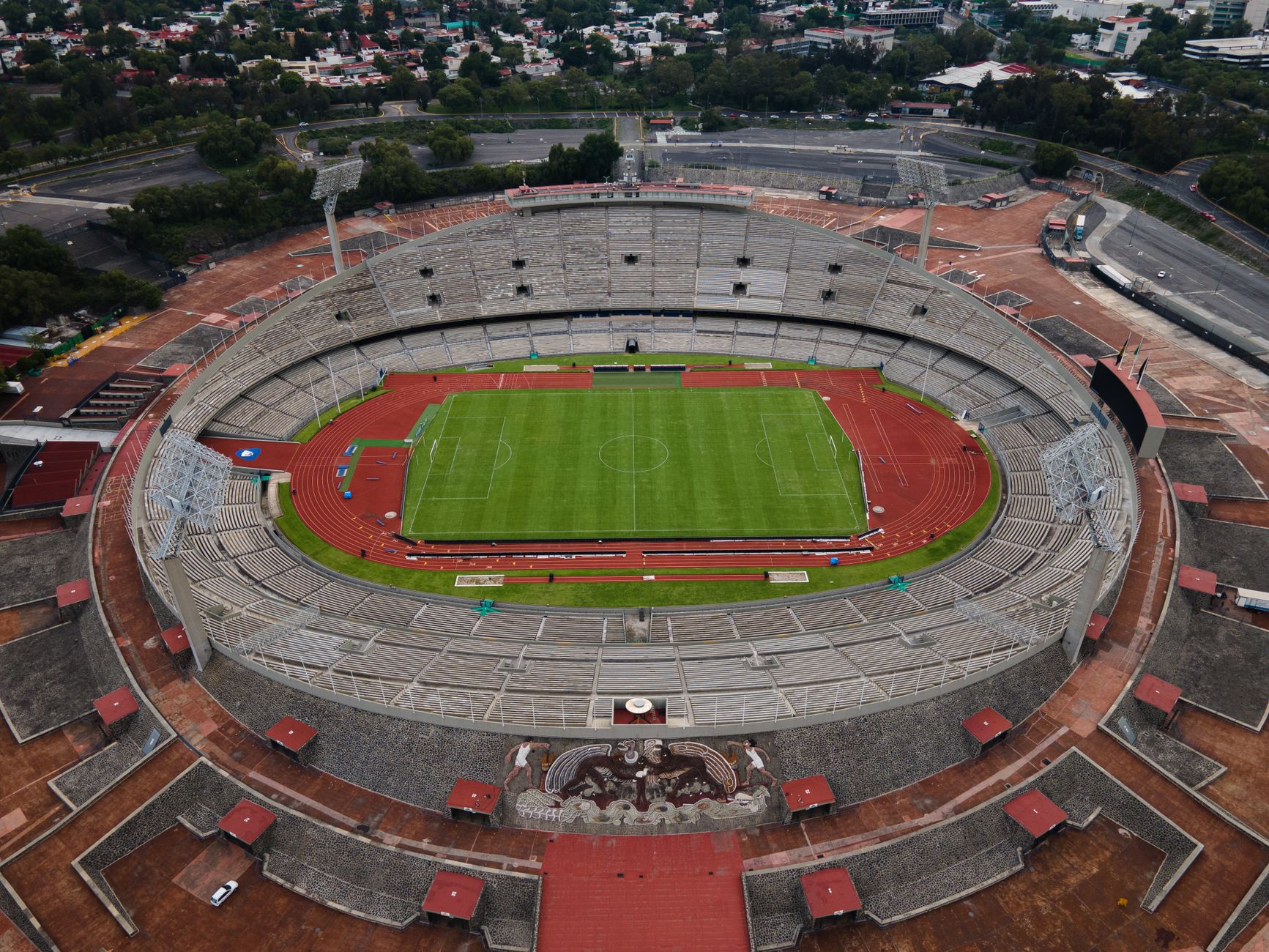
Photo by Andrés Parra on Pexels
For historical context, Encyclopaedia Britannica’s World Cup overview explains how the competition evolved from a smaller international championship into a global sporting institution. That history matters because tournament expansion has always altered the balance between spectacle and sporting strain. FIFA’s 2026 model makes the calendar broader, but not automatically fairer.
The practical setup should be a spreadsheet or reliable digital calendar containing:
- Fixture date and kickoff time.
- Host city and stadium.
- Team travel route.
- Days of rest since the previous match.
- Potential opponent in the next round.
- Local viewing time for your region.
Do not trust memory. I once misread a knockout kickoff by two hours and missed the opening goal while confidently explaining the “planned” tactical approach to nobody who asked. A verified schedule is cheaper than that particular humiliation.
Where It Held Up
The schedule holds up best in its variety. The 2026 World Cup provides more matches, more national-team stories, and more opportunities to study teams outside the traditional European and South American hierarchy. Morocco’s 2022 run showed how quickly a disciplined defensive structure can overturn assumptions, while Japan’s victory over Germany demonstrated that match-state management can matter more than possession totals.
The expanded format also provides greater margin for recovery after one poor result. In the group stage, 12 groups of four teams will compete, with the top two from each group and the eight best third-place teams advancing. That design reduces the chance that a single early defeat ends a major nation’s campaign, although it creates complicated late-stage permutations for teams tied on points.
My schedule test identified three genuine strengths:
- More competitive survival routes: third-place qualification can keep a team alive after a draw and a narrow defeat.
- More tactical evidence: eight or nine days of group-stage football can reveal whether an apparent contender is genuinely stable.
- Better regional access: supporters in North America can attend matches without crossing continents, although some corridors remain demanding.
The third-place mechanism is especially important for prediction work. A team with four points will usually have a realistic route forward, but goal difference, goals scored, and disciplinary or ranking criteria may become decisive. Check the published competition regulations rather than relying on the lazy claim that “four points guarantees qualification.” It does not always guarantee anything.
A less obvious scheduling edge
The most overlooked edge is not simply rest days; it is the interaction between rest and climate. A team moving from a cooler Pacific Northwest setting in Seattle to humid Miami may face a sharper physical adjustment than a raw mileage table suggests. Seattle, Miami, Monterrey, and Mexico City present different temperature, altitude, and humidity profiles, which can influence pressing intensity and substitution timing.
This is where Stadium View’s [Internal Link: team tactics and formation analysis] becomes valuable. A high press that looks dominant in the first match may become reckless when repeated in heat and humidity. Conversely, a low-block team with strong set-piece execution can benefit from conserving energy across a long campaign.
The strongest schedule-reading process is therefore:
- Mark every team’s venue sequence.
- Record altitude, temperature, and humidity risks.
- Count full rest days rather than calendar dates.
- Identify whether a team travels before or after a high-intensity match.
- Compare squad depth in midfield and at full-back.
- Reassess predictions after confirmed lineups.
See how the schedule connects with form, fitness, and venue conditions before making your next assessment.
Where It Fell Apart
The schedule falls apart when convenience is mistaken for fairness. North America is a vast tournament zone, and the distance between host cities can be punishing. A supporter may happily fly from Vancouver to Dallas, but a team moving between distant venues must manage recovery, training, sleep, logistics, and media obligations before anyone discusses tactics.
The 2026 tournament also increases the danger of false confidence. More matches mean more statistics, but statistics collected in different climates and against uneven opposition do not automatically form a clean comparison. A team may lead possession in one group match, defend deep in another, and still be judged through a simplistic “average performance” label.
Several weaknesses deserve special attention:
- Kickoff times may be inconvenient for European, Asian, and African audiences.
- Travel planning can become expensive during the group and knockout stages.
- Third-place qualification creates uncertainty until multiple groups finish.
- The additional Round of 32 increases the physical burden on finalists.
- Team quality may vary more widely across the 48-team field.
- Venue climate can distort assumptions based on previous tournament form.
The operational problem is even more concrete. A fan following England, Brazil, or the United States may need to track matches across several local time zones, while a global audience deals with late-night or early-morning kickoffs. The best solution is a calendar that stores local time, venue, and broadcast information together.
“Tournament football is different,” as FIFA competition guidance repeatedly emphasizes in substance, because knockout consequences change decision-making. That is not a decorative slogan. Teams protecting a one-goal lead in a Round of 32 match may manage risk more conservatively than they would in a group fixture, especially with extra time and penalties looming.
The prediction trap I would avoid
The specific edge case I would avoid is rating a team after only one match. In a 48-team tournament, an opening fixture may involve a debutant, a host, a high-altitude venue, or a side deliberately protecting energy. One match can expose a weakness, but it cannot reliably establish a tournament-wide trend.
Instead, wait for three pieces of evidence:
- Whether the team can create chances against a compact defense.
- Whether its midfield survives pressure without abandoning structure.
- Whether substitutes improve or weaken the match after the 60th minute.
The [Internal Link: World Cup player statistics tracker] can help, but use it intelligently. Progressive passes, pressures, shot quality, and defensive transitions are more informative than possession percentage alone. I have lost enough predictions by admiring attractive numbers that said nothing about the decisive moment.
Photo by Franco Monsalvo on Pexels
Would I Use It Again?
Yes, I would use the 2026 World Cup schedule again, but never as a standalone prediction tool. It is an excellent framework for organizing matches, identifying fatigue patterns, comparing host-city conditions, and finding moments when squad depth may decide the result. It is not a crystal ball, and anyone selling certainty around international football is selling “official” confidence with no refund policy.
For responsible fans, the schedule should support analysis rather than reckless speculation. If you follow match predictions, set a fixed entertainment budget, avoid chasing losses, and treat every forecast as uncertain. Gambling laws differ across jurisdictions, and the National Council on Problem Gambling provides practical resources for recognizing harmful betting behavior. A prediction is never worth compromising rent, food, debt payments, or personal safety.
My final operating checklist is simple:
- Verify the fixture through FIFA or a trusted broadcaster.
- Check the confirmed starting lineups.
- Review injuries and suspensions.
- Compare rest days and travel.
- Inspect weather and venue conditions.
- Separate statistical evidence from reputation.
- Set limits before viewing or betting.
- Stop when the analysis becomes emotional rather than rational.
Stadium View is most useful when it combines fixture information with tactical interpretation, player statistics, and daily tournament context. That combination is stronger than a static schedule because football changes every evening. A team that looked exhausted on June 18 may look transformed five days later; another may be quietly carrying an injury problem that the public numbers have not yet captured.
The final will be played on July 19 at MetLife Stadium, but the tournament will be decided much earlier by recovery, selection, defensive discipline, and the ability to survive awkward matchups. My recommendation is firm: build your 2026 World Cup calendar now, annotate it with travel and rest, and update your judgment only when evidence earns it.
Ready to follow the tournament with sharper context and fewer assumptions? Explore Stadium View’s World Cup analysis before the first whistle.
Frequently Asked Questions
Q: What is the 2026 FIFA World Cup format?
A: The 2026 FIFA World Cup features 48 teams divided into 12 groups of four, with 104 total matches across three host countries. The top two teams from each group and the eight best third-place teams advance to a 32-team knockout phase. This creates a new Round of 32 before the Round of 16, meaning the eventual champion may play eight matches rather than seven.
Q: When does the World Cup 2026 start and end?
A: The 2026 World Cup starts on June 11, 2026, and ends with the final on July 19, 2026. The opening match is scheduled for Estadio Azteca in Mexico City, while the final is scheduled for MetLife Stadium in East Rutherford, New Jersey. Check FIFA and local broadcasters for confirmed kickoff times because regional listings may display different time zones.
Q: Which countries host the World Cup 2026?
A: The United States, Canada, and Mexico jointly host the 2026 FIFA World Cup. Matches are scheduled across 16 cities, including Toronto, Vancouver, Mexico City, Guadalajara, Monterrey, Los Angeles, Dallas, Miami, Seattle, and New York/New Jersey. The United States provides the largest number of venues, while Mexico hosts the opening match.
Q: How can I follow the World Cup 2026 schedule?
A: Follow the schedule through FIFA’s official tournament pages, reputable broadcasters, and a calendar that records local kickoff times and venues. Add each fixture to your phone with the stadium, group, and knockout pathway included. Stadium View can supplement the calendar with team tactics, player statistics, injury updates, and match predictions as the tournament develops.
Q: What is the difference between the 2022 and 2026 World Cup formats?
A: Qatar 2022 featured 32 teams and 64 matches, while the 2026 tournament features 48 teams and 104 matches. The 2026 format adds 40 matches and introduces a Round of 32 after the group stage. That change increases football volume and gives more teams a route into the knockout rounds, but it also adds physical demands for teams reaching the final.
Q: Why might World Cup 2026 predictions be difficult?
A: World Cup 2026 predictions are difficult because teams will face different climates, travel distances, rest periods, and opponent strengths across North America. A performance in cool Seattle may not translate directly to a match in humid Miami or at altitude in Mexico City. Use confirmed lineups, recent tactical evidence, venue conditions, and squad depth instead of relying only on rankings or reputation.
Q: What should I do if World Cup betting becomes stressful?
A: Stop betting immediately if you are chasing losses, exceeding your preset budget, hiding activity, or treating results as a way to recover financial problems. Set a fixed entertainment limit before the match and never use money needed for essentials. For confidential guidance and responsible-gambling resources, consult the National Council on Problem Gambling or the relevant regulator in your jurisdiction.